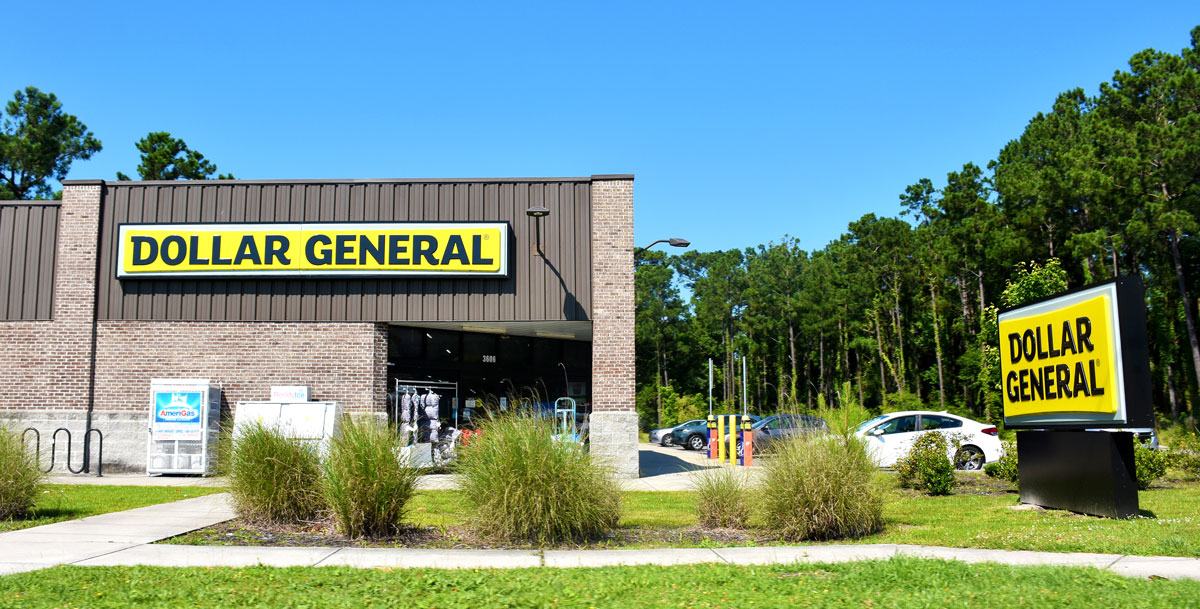
The Demographic Overlap You're Missing
Most laundromat marketing starts with demographic assumptions: target renters, target lower-income households, target apartment dwellers. These work, but they miss a more precise signal hiding in plain sight.
Dollar store shoppers and laundromat users are often the same people.
The correlation isn't about income—it's about behavior. Dollar store shoppers share key characteristics with laundromat users:
- Value-consciousness: Both customer bases prioritize getting more for their money
- Errand-running patterns: Both visit locations as part of regular weekly routines
- Geographic overlap: Dollar stores and laundromats often anchor the same strip malls
- Time flexibility: Both customer bases often shop during off-peak hours
When we analyzed Mark 24/7's campaign data, dollar store shoppers delivered $1.45 cost per visit in Florida and $2.34 in Alabama—consistently 8-9% below campaign averages. For context on why these markets differ, see our Florida vs Alabama market comparison.
The "Task Mode" Psychology
Dollar store visitors are already in "errand mode" when they're targeted. Unlike someone scrolling social media at home, a person leaving Dollar General is:
Physically mobile — They're already out running errands
Task-oriented — They're in a "get things done" mindset
Geographically proximate — They're likely within your trade area
Receptive to nearby offers — Location-based suggestions feel relevant
This is why behavioral targeting (what people actually do) outperforms demographic targeting (who we assume people are). The dollar store visit is a behavioral signal that predicts laundromat usage more reliably than income brackets. The same principle applies to first-party customer data, which delivers even better results at $0.22 CPV.
How to Execute Dollar Store Targeting
Step 1: Map dollar stores in your trade area
Identify every Dollar General, Dollar Tree, Family Dollar, and similar discount retailers within 3-5 miles of your laundromat locations. These become your targeting geofences.
Step 2: Set appropriate recency windows
Target people who visited dollar stores within the last 30 days. This ensures the behavioral signal is fresh while maintaining a large enough audience pool.
Step 3: Layer with geographic proximity
Prioritize dollar store visitors who live or work near your laundromat. The combination of behavioral affinity and geographic convenience maximizes conversion probability.
Step 4: Test against control audiences
Run dollar store targeting alongside income-based or renter-based audiences. Compare CPV and conversion rates to validate the approach for your specific market.
Convenience Stores: The Secondary Play
The same logic applies to convenience store visitors, though with slightly weaker correlation. Our data shows convenience store targeting delivers campaign-average results ($1.67 CPV in Florida, $2.58 in Alabama)—not as efficient as dollar stores, but still valuable for audience scale.
The optimal approach: layer both audiences. Dollar store visitors as your primary behavioral segment, convenience store visitors as a secondary expansion audience.
| Audience Segment | Florida CPV | Alabama CPV | vs. Average |
|---|---|---|---|
| Dollar Store Shoppers | $1.45 | $2.34 | -8% |
| Convenience Store Visitors | $1.67 | $2.58 | 0% |
| Competitor Conquest | $1.89 | $3.12 | +20% |
| Campaign Average | $1.57 | $2.58 | — |